
Most visitors walk right past the real Québec City without even knowing it. Behind the picture-perfect European facades and charming cafes lies North America’s only remaining walled city, a UNESCO World Heritage site where 400+ years of dramatic history can be found around every corner. Discovering Québec City history takes you through its peoples’ cultural resistance, military genius, and determination to preserve their identity against overwhelming odds.
Did you know that the outcome of a 15-minute battle on the Plains of Abraham in 1759 determined whether millions of North Americans would speak French or English today?
Disclosure: This article contains referral links to various services. If you click on these links and make a purchase, I may earn a commission or earn points or miles at no additional cost to you. These referral links help support the maintenance of this site and the creation of content. I only recommend products or services that I genuinely believe will be of value to my readers. Your support through these links is greatly appreciated.
For more information on the privacy policy, please make sure to click HERE.
Québec City Is More Than Just a Pretty Destination
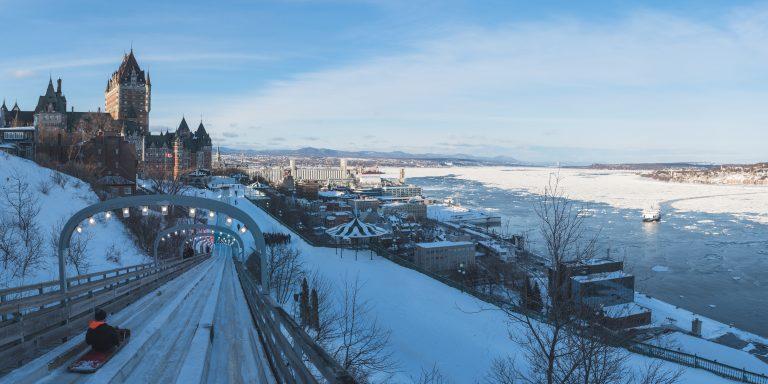
Every time I visit Québec City and stand on Dufferin Terrace, overlooking the St. Lawrence River, I feel something deeper than just admiration for its beauty. This city is so much more than just a postcard-perfect destination. Québec City holds centuries of culture and history.
After four visits, I’ve realized that knowing its past doesn’t just add context; it changes the way you experience every street, every fortress wall, and every conversation. Québec City isn’t just a place to see, it’s a place to understand.
When you walk Québec City’s cobblestone streets lined with French-style buildings, you’re actually exploring North America’s only walled city. This place has weathered battles, sieges, and centuries of cultural change, making it one of Canada’s most historically significant places.
Here’s what you should know to appreciate Québec City beyond its picturesque views:

What Every Visitor Should Know
Québec City’s story begins long before Europeans. Iroquoians, Algonquians, Innus, amongst other First Nations, lived here first, building communities along the river where they fished, hunted, and farmed. Jacques Cartier met these communities in 1535 and Samuel de Champlain’s encountered them later in his arrival in 1608.
Champlain’s Settlement (1608)
When Samuel de Champlain established Québec City in 1608, he founded what would become North America’s oldest French-speaking city. The name “Québec” comes from the Algonquin word “kebec,” meaning “where the river narrows”. This is an Indigenous connection many visitors never learn about.
Champlain chose this spot for its natural defenses, because of the cliff that overlooks the St. Lawrence River that made water-based attacks nearly impossible. What began as a fur trading post would later grow into the heart of New France.
What makes Québec City unique is how well-preserved its colonial architecture remains. Unlike many North American cities that demolished their historic buildings during modernization, Québec City protected theirs. The result is the only walled city north of Mexico, with nearly 3 miles of fortifications that still stand today.
Tip: Notice how shop signs and street names appear in French first, with English as secondary or absent entirely. This is is about preserving French Canadian cultural identity in this region.
The Fur Trade Era
Throughout the 1600s and 1700s, Québec City became the center of a thriving fur trade network. The French built alliances with Indigenous peoples, particularly the Huron-Wendat, the Algonquins, and the Montagnais, creating trade routes stretching to the Great Lakes and beyond to the Mississippi Valley. This economic success made Québec a target for European rivals.
The British Conquest
For over 150 years, Québec City stood at the center of French-British conflicts. The decisive moment came in 1759 during the Battle of the Plains of Abraham, when British forces under General James Wolfe defeated the French led by the Marquis de Montcalm.
Though the battle lasted just 15 minutes, it changed North America’s future. France surrendered its territories to Britain in the 1763 Treaty of Paris. Despite this political change, the French colonists maintained their language, religion, and civil law, which created the distinct Québecois culture that is present in this area today.
The Citadelle fortress now houses the Royal 22e Régiment, the only French-speaking regular force infantry regiment in the Canadian Forces. .
The American Revolution’s Northern Push
During the American Revolutionary War in 1775, Québec City successfully resisted American expansion. Forces led by Benedict Arnold and Richard Montgomery attempted to capture the city during a blizzard but failed. The city remained under British control, shaping the future border between Canada and the United States. The failure of this expedition almost cost Arnold his life, and set him on the path to treason.
Preserving French Identity
Despite British rule, Québec City maintained its French character. Residents preserved their language, Catholic traditions, and European architecture. The Quiet Revolution of the 1960s strengthened Québec’s unique identity, pushing for greater French autonomy in politics and culture. Today, Québec City stands as a proud symbol of French Canadian heritage and holds UNESCO World Heritage status.
The Château Frontenac Era
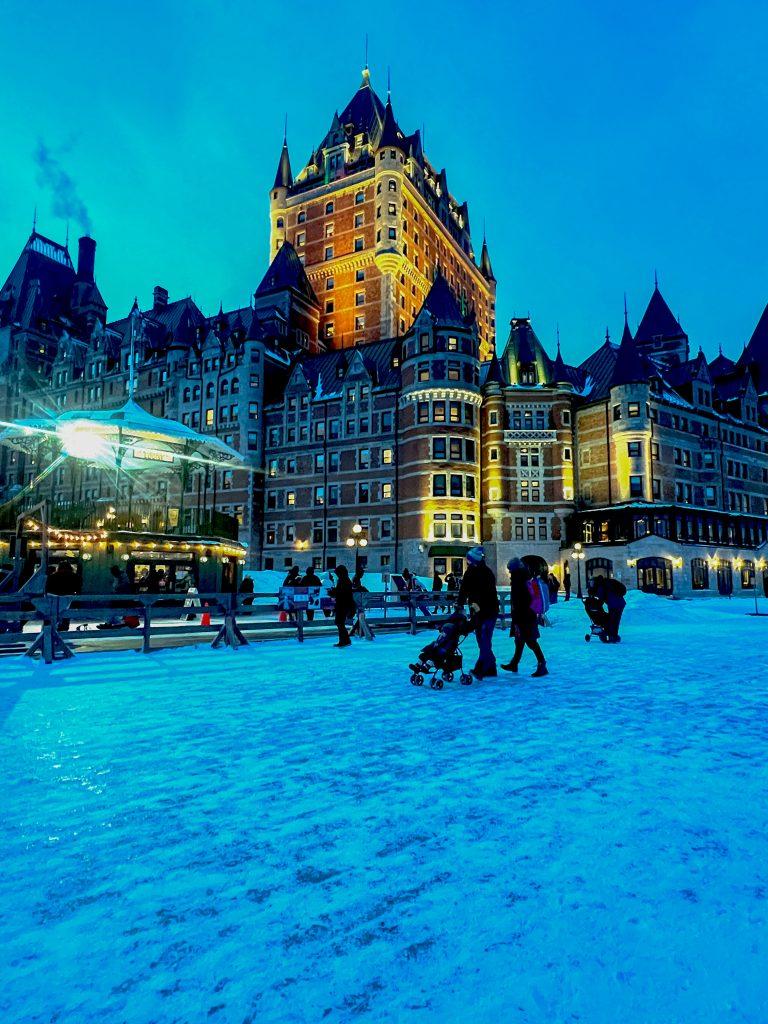
The city’s most recognizable landmark, Château Frontenac, was built in 1893 as a luxury hotel by the Canadian Pacific Railway to attract tourists. It remains the world’s most photographed hotel and defines Old Québec skyline.
Modern Québec City
Today’s Québec City balances its historical significance with modern life. The city hosts numerous cultural events, including the Carnaval de Québec, one of the world’s largest winter festivals that celebrates French heritage through parades, ice sculptures, and outdoor activities.
While Old Québec showcases French-British heritage, equally important stories can be found in the neighborhoods beyond the walls. Saint-Roch and Saint-Jean-Baptiste tell the story of Québec City’s industrial growth and immigration waves.
In the 19th century, Québec City became a major port of entry for immigrants to North America. Irish immigrants fleeing the Great Famine arrived in large numbers, settling in what is now the Saint-Jean-Baptiste neighborhood. Their influence remains visible in architecture, place names, and cultural practices.
Would you like to save this?
You can also find small but significant Latin American influences that have been growing in Québec since the 1970s. While not as prominent as in Montreal, there are pockets of Latino culture in certain neighborhoods.
Where to See Qubec City’s History
As soon as you walk through the walls into Vieux Québec (Old Québec). To connect with the city’s past, visit these important historical sites:
- Château Frontenac: Built in 1893 but located on the grounds of Champlain’s original fort
- Citadel of Québec: A massive fortress that still functions as a military installation
- Plains of Abraham: Site of the 1759 battle, now a peaceful urban park with historical monuments
- Notre-Dame de Québec Basilica-Cathedral: North America’s first Catholic parish, founded in 1647
- Place Royal: Often called the birthplace of French America, this square is where Samuel de Champlain founded Québec City in 1608.
- Notre-Dame-des-Victoires Church, the oldest stone church in North America, and beautifully restored buildings that showcase the city’s colonial past. Located in Place Royal.
- Fortifications of Québec: Nearly three miles of historic walls surrounding Old Québec, making it the only walled city north of Mexico. You can walk along parts of the fortifications and visit the gates for panoramic views.
- Parliament Building (Hôtel du Parlement): A stunning 19th-century building that serves as the seat of Québec’s provincial government. The architecture reflects the province’s unique political and cultural identity.
Experiencing Québec City Authentically
- Take a history-focused walking tour with Cicerone Tours.
- Learn basic French phrases to connect with locals.
- Stay in a historic property like Château Frontenac or Auberge Saint-Antoine to immerse yourself in the city’s past.

Québec City Still Lives Its History
The stories behind Quebec City’s historic sites are your key to experiencing this UNESCO treasure in ways most tourists never do. Learn about the strategic military positions at the Citadelle, and the cultural significance of Place Royale. Getting a better understanding Quebec’s past transforms your experience from ordinary sightseeing into an unforgettable visit to this beautiful city.
Every street, building, and tradition carries a piece of history that still shapes daily life. By looking beyond its postcard-perfect views, you’ll walk away with a deeper appreciation for this extraordinary place.
SOURCES:
History of Quebec City – written by David Mendel
Québec City – written by Brett McGillivray for Brittannica
Historic District of Old Québec – UNESCO
Resource List
? Subscribe to the blog and newsletter for exclusive content about this destination and more.
? If you are considering visiting Quebec City, make sure to check out the Quebec City travel guide.
? If you are considering visiting other destinations in Canada, make sure to check out the Canada travel guide.
? For currency conversions, use XE. This tool is extremely easy to use.
? For visa entry requirements to Canada and any country around the world, check this website.
? If this is your first time considering solo travel, you might find my Guide to Solo Travel helpful. It covers everything from picking your first destination and even Travel Hacking 101.
? Never travel abroad without travel insurance. To compare coverage and rates from many reputable insurers, use this tool.
? To learn more about the history of Québec, check this out.



 ES
ES