
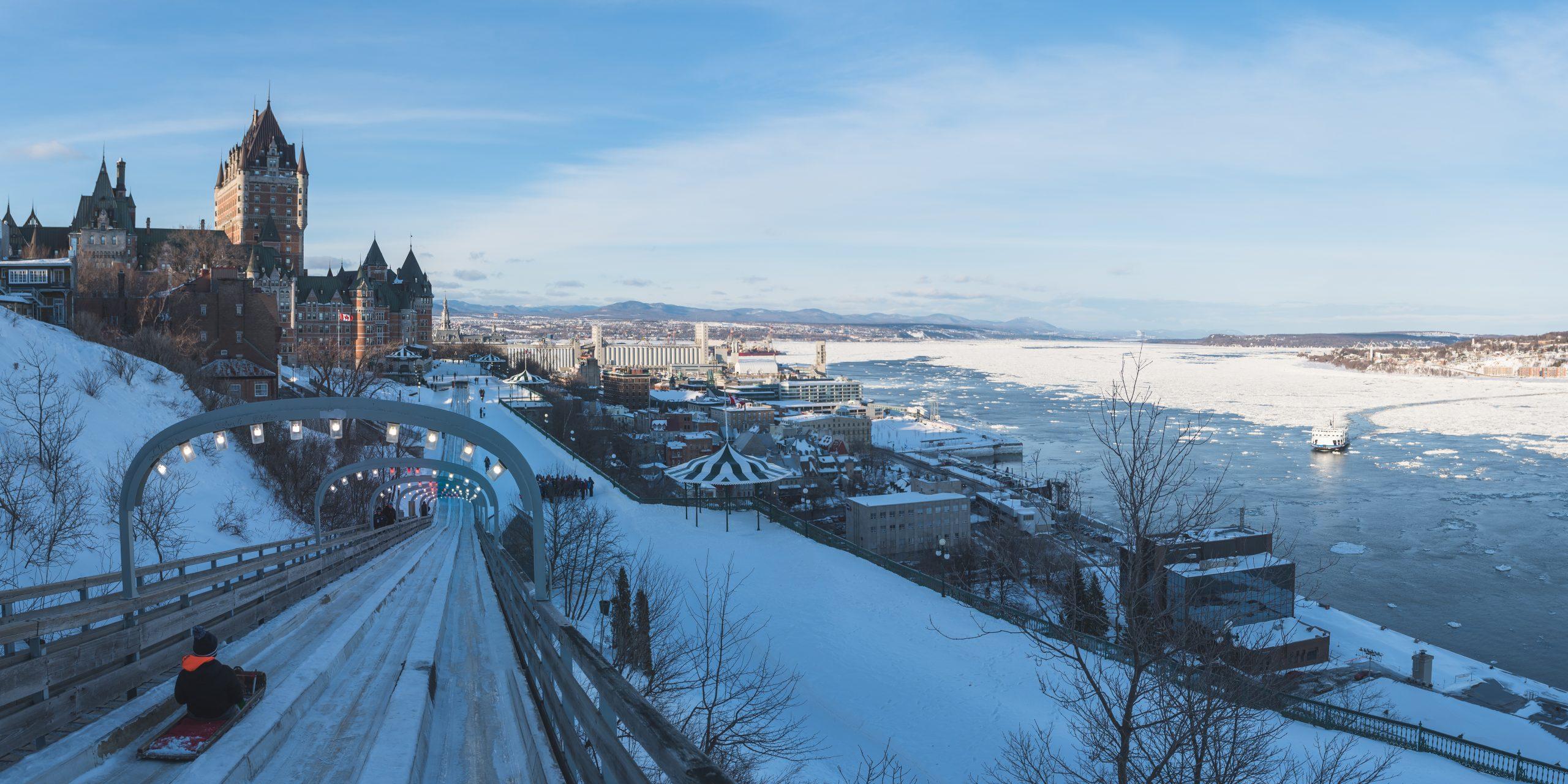
Quebec City transforms into something extraordinary every February. The Quebec Winter Carnival runs for roughly two weeks and draws hundreds of thousands of visitors to experience one of the world’s largest winter celebrations. I attended during Valentine’s Day weekend 2025, solo, and found myself completely absorbed in the energy of a city that refuses to let subzero temperatures dictate its mood.
Disclosure: This article contains referral links to various services. If you click on these links and make a purchase, I may earn a commission or earn points or miles at no additional cost to you. These referral links help support the maintenance of this site and the creation of content. I only recommend products or services that I genuinely believe will be of value to my readers. Your support through these links is greatly appreciated.
For more information on the privacy policy, please make sure to click HERE.
The Quebec City Winter Carnival is North America’s largest winter festival, transforming the city into a magical frozen wonderland every February. For the complete city experience beyond the carnival, check out my Québec City Travel Guide.
Ready to book? Here are my go-to resources:
I’ve visited Quebec City five times in the past two years. This guide draws from my firsthand experience attending Winter Carnival as a solo female traveler.
If you’re considering attending the Quebec Winter Carnival solo (or with someone), this guide is for you. I’ll cover everything from the must-see events to practical tips for navigating the festival alone, plus the unexpected romance of treating yourself to a solo winter getaway.
Quick Facts: Quebec Winter Carnival 2026
Dates: February 6-15, 2026
Location: Quebec City, Canada (primarily Old Quebec and Parliament Hill area)
Cost: Effigy pass $29-39 CAD (free for children 12 and under)
Best for solo travelers: Yes. Bar seating everywhere, no partner-required activities, safe for solo women
Official website: carnaval.qc.ca
Is attending the Quebec Winter Carnival solo the right trip for you?
This trip is best for solo travelers who enjoy walking cities, don’t mind freezing cold weather with proper gear, and want a cultural festival rather than just a party scene. Quebec City during carnival feels romantic and festive. The vibe skews from families-by-day, adults-by-night, with traditional music and cultural activities.
If you hate winter, dislike crowds, or expect indoor-only attractions, Quebec Winter Carnival may not bring you any joy. The cold is absolutely real. The walking outdoors can be constant, but the reward is a genuinely unique experience you won’t find anywhere else.
A Brief History of the Carnaval de Québec
The first organized Winter Carnival took place in 1894, though the tradition of winter celebrations in Quebec dates back even earlier to New France. French colonists adapted their European carnival traditions to the harsh Canadian winters, finding ways to mark the weeks before Lent despite the challenging climate. The event went through periods of pause, including during the World Wars and the Great Depression, before being revived in 1954 in its modern form.
That 1954 revival established many of the traditions that continue today. Business owners and community leaders wanted to boost winter tourism and give locals something to look forward to during the darkest, coldest months. The strategy worked. What started as an economic development initiative became a genuine cultural institution.
Today, the Carnaval de Québec stands as one of the largest winter festivals globally, drawing visitors from around the world and involving much of the city’s population. The event centers on Bonhomme Carnaval, the cheerful snowman mascot who has become synonymous with the celebration. His image appears everywhere during carnival season, and the effigy token you purchase serves as your festival pass while also getting you discounts at various attractions around the city.
What to Expect at Winter Carnival Quebec City
The carnival sprawls across multiple sites, with the main festivities concentrated around Place de l’Assemblée-Nationale (in front of the Parliament building), Place George V, and Parc de la Francophonie. Night parades wind through the streets. Ice sculptors carve intricate works that line public spaces. Traditional music performances happen outdoors, and yes, people stand in the cold to enjoy them.
What struck me most was the collective determination of the Quebecois to embrace winter rather than endure it. Families bundled their children in snowsuits and lined up for the parade. Couples sipped hot drinks while watching ice canoe races on the frozen St. Lawrence. Groups of friends gathered around outdoor fire pits, laughing and speaking rapid French that I caught only fragments of. The cold was real, often painful, but nobody seemed to care.
Bonhomme’s Ice Palace
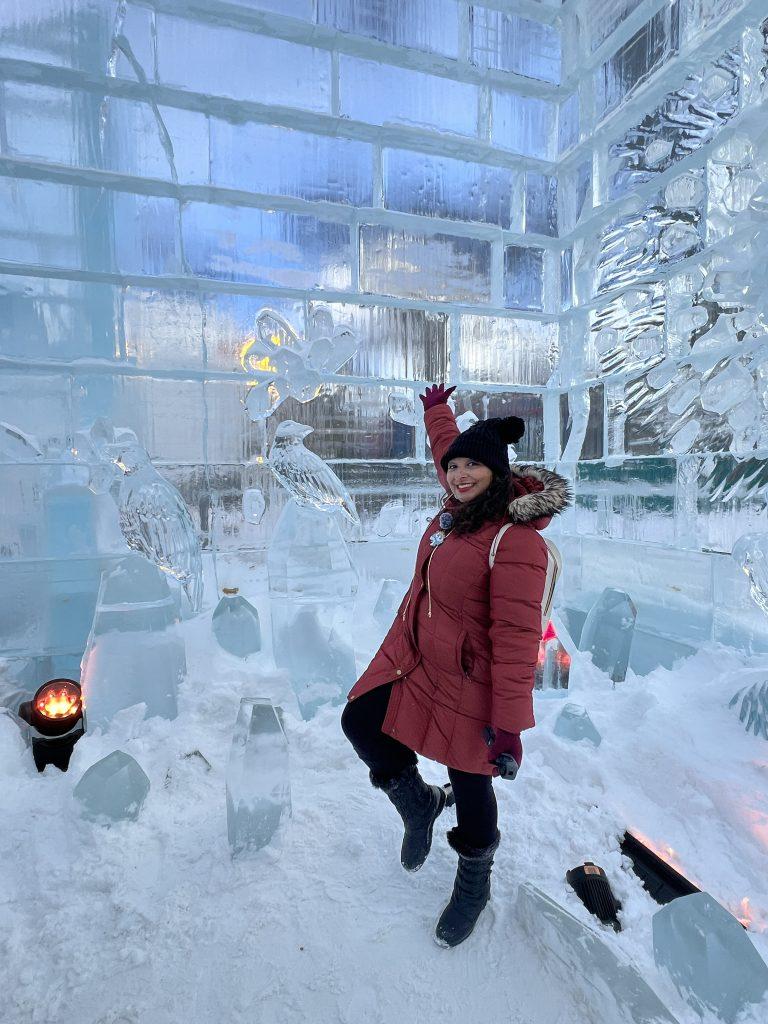
The centerpiece of the carnival is Bonhomme’s Ice Palace, a massive structure built entirely from ice and snow. The palace serves as the symbolic home of Bonhomme Carnaval and features intricately carved designs, multiple rooms to explore, and regular appearances by Bonhomme himself. It’s rebuilt each year, so the design changes, but the scale consistently impresses. At night, colored lighting transforms the ice into something otherworldly.
Don’t confuse Bonhomme’s Ice Palace with the Hôtel de Glace at Valcartier. The Ice Palace on Parliament Hill is smaller and included with your effigy pass.
Hôtel de Glace
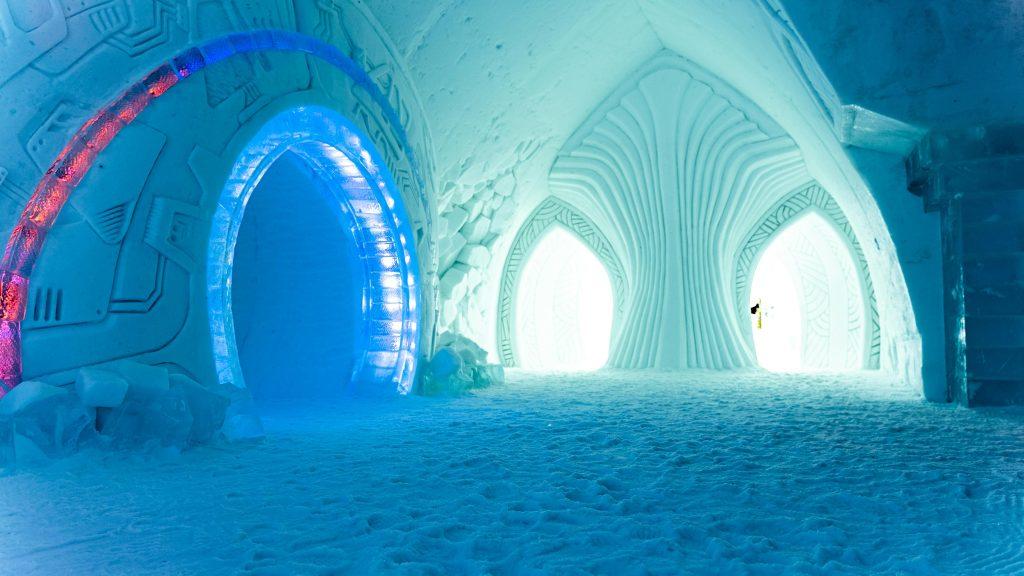
The Hôtel de Glace is North America’s only ice hotel, a 32,000-square-foot structure located about 20 minutes outside Quebec City that requires separate admission. I didn’t make it there during my trip, and I regret it.
The ice hotel features a Grand Hall, themed suites, a chapel where couples actually get married, and an Ice Bar serving cocktails in glasses carved from ice. You can visit during the day, but the real experience is spending the night in an arctic sleeping bag on a bed with an ice base. They provide mandatory training before your overnight stay, and you also get a regular room at the adjacent Hôtel Valcartier for showers and warming up. If sleeping in -4°C temperatures sounds appealing, the 2026 season runs January 4 through late March.
The Ice Canoe Race
This event deserves explanation because it’s unlike anything you’ll see elsewhere. Teams of five athletes race canoes across the partially frozen St. Lawrence River, alternating between paddling through open water and jumping out to push their canoes across ice sheets. They wear cleated boots for traction and carry spiked paddles.
Ice canoeing dates back to the 1600s when it served as the only way to cross the St. Lawrence in winter. The first race took place at the 1894 carnival. Today, teams from across Quebec and beyond compete in categories including Elite, Women’s, Mixed, and Sport divisions. Watching the racers navigate ice floes and currents while battling subzero temperatures is genuinely thrilling. Spectators can watch for free from Quays 19 and 21 at the Port of Quebec.
The Parade
The night parade deserves your attention. It’s a family-friendly affair with illuminated floats, costumed performers, and Bonhomme Carnaval himself making appearances. Children lose their minds over it. Adults find themselves charmed despite the numbness creeping into their toes.
A word of warning: standing still in February Quebec City temperatures will make you cold faster than you expect. Bring more layers than you think you need. Heat packs for your gloves and boots are worth the investment. I learned this the hard way, shifting from foot to foot while waiting for the parade to start.
Traditional Music Concerts
Outdoor music stages feature traditional Quebecois folk music throughout the carnival. The concert I attended had people dancing despite the cold, stamping their feet as much for warmth as for rhythm. There’s something particular about live music in winter air, the way sound carries differently, the way everyone present has made a deliberate choice to be there rather than somewhere warm.
Ice Sculptures and Snow Installations
Artists from around the world come to carve massive ice and snow sculptures. These installations change each year, but the quality consistently impresses. The sculptors work in blocks of clear ice harvested from the St. Lawrence, using chainsaws for the rough shaping and delicate hand tools for the details. Watching them work during daylight hours offers insight into the technical skill involved.
Walking through the sculpture gardens at night, when colored lighting transforms the ice into glowing blue, white, and purple structures, felt almost surreal. The cold preserves the sculptures perfectly, and the clear night air makes the details sharp. Some installations incorporate interactive elements or seating areas carved from snow. Others feature moving parts or sound components. The range of artistic vision on display goes far beyond the typical ice sculpture you might see at a hotel banquet.
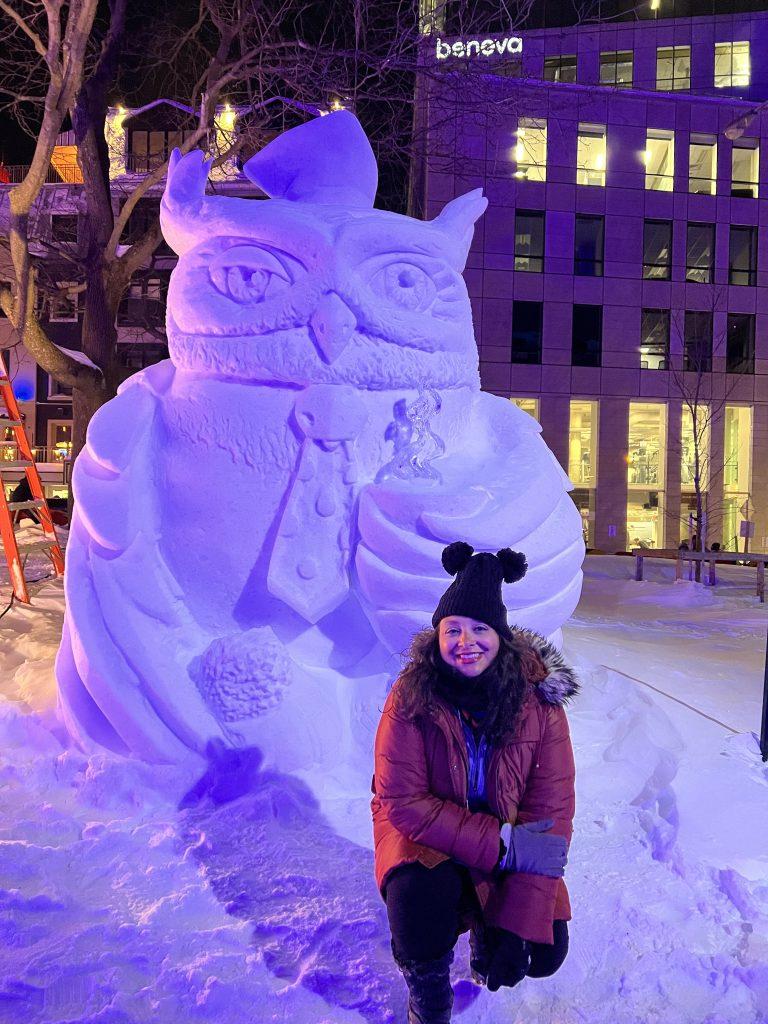
Attending Winter Carnival as a Solo Traveler
Solo travel during Valentine’s Day weekend could feel isolating in the wrong context. Quebec City during Winter Carnival is not that context.
I treated the trip as a gift to myself. A romantic weekend, just without the other person. This reframe made all the difference. I bought myself flowers, ordered the expensive wine and indulged over meals without checking the time. The freedom of solo travel gets discussed often, but the luxury of it deserves more attention. Luxury in the sense of space, of choosing exactly what you want without compromise.
The city accommodates solo visitors well. Restaurant bar seating is common, and bartenders in Quebec City tend toward friendly without being intrusive. Attractions don’t require partners or groups. And there’s something freeing about experiencing a festival on your own schedule, staying at the parade until you’re ready to leave, wandering without negotiating destinations, eating dessert for dinner if you want to.
The snow added to the romance of it. Quebec City in winter looks like the setting for a romantic film. Cobblestone streets are beautifully dusted by soft white snow. Warm light spilling from restaurant windows. The crunch of fresh snow under your feet. It’s the kind of beauty that feels intentionally curated but happens naturally in this beautiful city.
Solo Safety and Comfort
I’ve never felt unsafe in Quebec City. The main carnival areas are well-lit, well-staffed, and populated until late evening. Old Quebec is compact and walkable, so you’re never far from other people or warm refuges.
A few Safety observations for solo female travelers
The city is genuinely safe. I walked alone at night without concern. Standard awareness applies, but Quebec City doesn’t require the hypervigilance some destinations demand.
Festival staff and volunteers are everywhere during carnival. If you need help, finding someone is easy.
Bars and restaurants are accustomed to solo diners. Nobody made me feel awkward for eating alone.
The cold is a bigger concern. Pay attention to your body, and your surroundings.
When Cold Becomes Dangerous
Speaking of cold: know your limits. Quebec City in February can drop to -20°C (-4°F) or colder with wind chill. This isn’t “bundle up and you’ll be fine” cold. This is cold that can hurt you if you’re not paying attention.
Signs you need to get inside immediately: numbness that doesn’t resolve with movement, skin that looks waxy or white, confusion or unusual fatigue, shivering that stops (this is a bad sign, not an improvement).
Standing still is worse than walking. If you’re waiting for a parade or watching a concert, keep moving. Shift your weight, stamp your feet, walk in small circles. Motion generates heat.
Take breaks before you need them. The temptation is to push through and see everything. Resist it. A 30-minute warming break in a café will let you enjoy four more hours outside. Skipping that break will send you back to your hotel early.
Nobody anywhere will think less of you for prioritizing warmth over toughness, it isn’t anybody’s business anyway.
Solo Travel Budget Breakdown
Here’s roughly what I spent during my long weekend at Winter Carnival (in CAD, converted from USD at the time):
- Effigy pass: $29-39 CAD
- Accommodations: $150-250/night (book early; prices spike and hotels sell out during carnival)
- Meals: $60-100/day (dining solo means no splitting, but also no pressure to order multiple courses)
- Strom Spa with effigy discount: ~$50 CAD for half-day access plus additional cost for lunch. There’s a 25% discount with your effigy on spa access.
- Maple treats: $15-20 total
- Transportation from airport: ~$40 taxi/rideshare
- Transportation from train station: ~$12-$20 CAD
Total for a 3-night solo trip: approximately $800-1,200 CAD depending on accommodation choices and dining preferences. Not cheap, but comparable to any major city winter trip.
How I Structured My Solo Days
Pacing matters when you’re outside in subzero temperatures. Here’s the rhythm that worked for me:
Morning (9am-12pm): Start slow. Café, pastry shop, or a sit-down breakfast. Let your body wake up before heading into the cold. I spent mornings at places like Boulangerie Pâtisserie Le Croquembouche and Café La Maison Smith, watching the city come alive through frosted windows.
Midday (12pm-3pm): Carnival grounds. This is when I explored the smaller Ice Palace, watched ice sculptors at work, and wandered the main festival sites. Crowds are lighter than evenings, and daylight makes photography easier.
Afternoon (3pm-6pm): Warm-up time. This is when I went to Strom Spa, returned to my hotel for a rest, or ducked into a museum. Fighting through the cold all day leads to exhaustion. Building in a warming break kept the trip enjoyable.
Evening (6pm-9pm): Parade, outdoor music, or a long dinner. The carnival comes alive at night, and if you’ve rested in the afternoon, you’ll actually enjoy it instead of counting the minutes until you can get warm.
Night: Off to bed between 10PM and Midnight. The cold takes more energy than you expect. I rarely stayed out past midnight and never regretted it.
Where I Ate
Boulangerie Pâtisserie Le Croquembouche is a highlight. They had themed Valentine’s Day and Winter Carnival desserts that were almost too beautiful to eat. Almost. The pastry cases glowed with pink and red confections, heart-shaped everything, and seasonal treats featuring Bonhomme Carnaval’s likeness rendered in chocolate and marzipan. I sat at a small table by the window, watching snow fall on Rue Saint-Jean, eating something decadent and feeling completely content.
Don Vegane proved that Quebec City’s food scene extends beyond poutine and tourtière. The restaurant offers creative plant-based dishes that feel considered rather than like afterthoughts. In a city known for meat-heavy cuisine, finding a vegan spot this good was a pleasant surprise. The dishes leave you happily full yet not overly stuffed, if you know what I mean.
La Buche consistently delivers one of the best meals I have during my visits to Quebec City. The restaurant focuses on local ingredients and changes its menu seasonally. The atmosphere leans like a casual ice or sugar shack, but the food takes itself seriously in the best way. It is meaty and hearty and it is the literal definition of stick to your bones. The line is usually out the door and for good reason. Do yourself a favor and get reservations as soon as you book. your trip. You will not regret it.
Would you like to save this?
A full review of where I’ve ate during my many trips to Quebec City will be coming soon!!
Strom Spa Nordic
This deserves its own section because it might have been my favorite experience of the trip.
The effigy token you purchase for Winter Carnival gets you discounts at various Quebec City attractions, including Strom Spa. I took advantage of a 25% discount for an afternoon that stretched into evening.
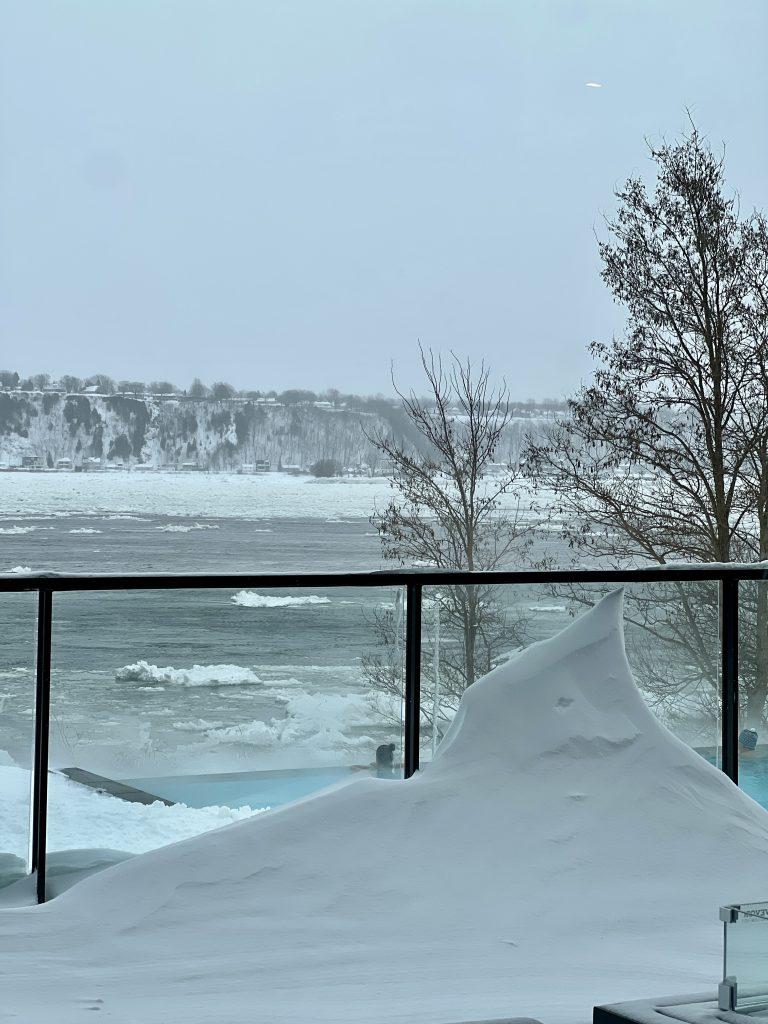
Nordic spa culture involves cycling between hot and cold experiences: saunas, steam rooms, hot pools, cold plunges, and rest areas. You’re meant to move through these cycles slowly, spending hours rather than rushing. The outdoor hot baths overlooking the St. Lawrence River, steam rising into freezing air while snow accumulated on my shoulders, approached something transcendent.
I had lunch at their restaurant and stayed until the winter sun set. The food was better than spa food typically is, thoughtfully prepared rather than an afterthought to the main attraction. Pairing the physical experience of extreme temperature shifts with a good meal in the middle felt like genuine self-care rather than the hashtag version.
What to Eat and Drink at the Carnival
Winter Carnival has its own food culture. You should participate.
Maple Taffy (Tire d’Érable) is the quintessential carnival treat. Vendors pour hot maple syrup onto fresh snow, where it cools into a sticky, chewy consistency. You roll it onto a popsicle stick and eat it like a lollipop. At around $3 CAD, it’s one of the cheapest thrills at the festival. The taste is pure maple, intensified by the cold air.
Caribou is the unofficial official drink of the carnival. This alcoholic beverage blends red wine, whisky or brandy, and maple syrup with warming spices. Served hot or cold, it tastes like a stronger, sweeter mulled wine. You can buy it in a hollow plastic cane shaped like Bonhomme Carnaval and carry it around as you explore. Quebec’s open container laws make an exception for this specific vessel during carnival season.
Poutine needs no introduction if you’ve spent any time in Quebec, but eating it during carnival feels ceremonial. Chez Ashton is a local favorite fast food chain, recommended by some residents. The combination of fresh-cut fries, squeaky cheese curds, and rich gravy works particularly well after hours in the cold.
Snack Bar Saint-Jean is another strong option, especially if you want something a step up without leaving fast, casual territory. Open late and popular with locals, it’s known for thicker fries that hold their texture, generous squeaky curds, and a gravy that leans a bit richer and more peppery. It’s the kind of poutine that feels earned after a long night walking Rue Saint-Jean or coming in from the cold during Carnival.
Beaver Tails are fried dough pastries stretched to resemble their namesake, then topped with cinnamon sugar, chocolate, or fruit. You can find them at Queues de Castor
The festival grounds have numerous food vendors, plus the restaurants of Old Quebec are steps away. Sugar shack (cabane à sucre) stands offer additional maple-based treats if the taffy doesn’t satisfy your sweet tooth.
Practical Tips for Winter Carnival Quebec City
When to Go
The Carnaval de Québec typically runs for two weeks in late January through mid-February. Weekends get more crowded, particularly the opening and closing weekends. If you can manage a midweek visit, you’ll find shorter lines and easier restaurant reservations.
What to Pack
Quebec City in February is legitimately freezing cold. Temperatures regularly drop below -15°C (5°F), and with wind chill, it can feel much worse.
Essential items include:
Thermal base layers (wool or synthetic, not cotton)
A serious winter coat rated for subzero temperatures
Insulated waterproof boots with good traction
Multiple pairs of warm gloves or mittens
A hat that covers your ears completely
A scarf or neck gaiter
Hand and toe warmers
Lip balm with SPF
Sunglasses (snow glare is real)
Something I wish I’d known: rechargeable heated vests exist and they’re worth considering. Hours of outdoor activities in those temperatures will test the limits of even good layering. Battery-powered heat provides a buffer.
Getting Around
The main carnival areas are walkable from most Old Quebec hotels. The city keeps sidewalks reasonably clear of snow, though ice can be an issue. Those boots with good traction matter.
If you’re staying outside Old Quebec, know that driving and parking in the area during carnival can be challenging. Consider using the public transport system (bus), taxis or rideshare services.
The Effigy Token
Purchase your effigy at the carnival grounds or online before you arrive. This token serves as your festival pass, getting you into carnival events and sites. It also functions as a discount pass at various restaurants, attractions, and spas around the city. Check the official carnival website for a current list of participating vendors. The pass is also a commemorative token and the designs change every year.
Language
Quebec City is predominantly French-speaking. Most tourism workers speak English, but making an effort with basic French goes a long way. Even a simple “bonjour” before asking if someone speaks English shows respect for the local culture.
Where to Stay
The Parliament Hill area puts you within walking distance of the main carnival sites. Hotels in Old Quebec (within the walls) and the Montcalm and Saint-Jean-Baptiste neighborhoods are also close.
Worth The Splurge
If you want to splurge, I recommend staying at:
- Fairmont Le Chateau Frontenac – The most recognizable hotel in Québec City, with direct access to Old Québec and easy walks to multiple Carnival sites. It’s worth experiencing at least once, especially in winter when the setting feels especially dramatic.
- Monsieur Jean – Hotel Particulier: A small, design-forward boutique hotel located inside the Old Québec city walls, close to Rue Saint-Jean and within easy walking distance of multiple Winter Carnival sites. It’s a strong splurge option if you want a modern stay without sacrificing location.
- Aubergé Saint Antoine: A quietly elegant hotel near Place Royale in Lower Town, where historic details and modern comfort come together seamlessly. It’s an especially appealing choice in winter, offering a calm, intimate place to retreat after cold days at Carnival while staying close to the Old Port and Old Québec sights.
Mid-range hotels
If you want comfort and location without luxury pricing, these are solid options:
- Hôtel Clarendon: A classic, historic hotel inside the Old Québec city walls on Rue Sainte-Anne, with an old-world atmosphere that feels fitting for winter in the city. Its central location makes it easy to step in and out of Carnival events, cafés, and landmarks while enjoying a comfortable, well-kept stay.
- Hôtel Cap Diamant: A small, independent boutique hotel located inside the Old Québec city walls, valued primarily for its location and intimate scale. Rooms vary in size and style, reflecting the building’s historic character rather than a standardized hotel layout. It’s a good fit for travelers who prioritize atmosphere and walkability and are comfortable with a simpler, more residential hotel experience.
Budget-conscious options (location still matters)
If you’re watching costs but don’t want to sacrifice convenience:
- Auberge Internationale de Québec – A social hostel with private room options, centrally located and popular with solo travelers.
- Hôtel AtypiQ – Compact rooms in Old Québec that work well if you plan to spend most of your time outside exploring.
Book early. Winter Carnival draws thousands of visitors, and well-located hotels fill up months in advance, particularly for opening and closing weekends.
Getting to Quebec City
By Air: Jean Lesage International Airport (YQB) serves Quebec City with connections through Montreal, Toronto, and some US cities. The airport is about 20 minutes from downtown by taxi or rideshare.
By Train: VIA Rail connects Quebec City to Montreal (about 3 hours) and other Canadian cities. The station is a short taxi ride from Old Quebec.
From Montreal: The drive takes approximately 2.5 to 3 hours via Highway 20 or 40. Several bus companies offer service between the two cities.
Frequently Asked Questions About Winter Carnival Quebec City
Quebec City Beyond Winter Carnival
Having visited Quebec City five times in the past two years, I can confirm that the city warrants repeat trips regardless of season. The winter version of the city has a particular magic though.
Snow transforms the already picturesque architecture into something from a holiday card. Christmas decorations often stay up through February, adding to the festive atmosphere. The narrow streets of Old Quebec, the stone buildings, the glimpses of the frozen St. Lawrence, all of it feels heightened under a blanket of white.
For those new to Quebec City, a trip during Winter Carnival offers an excellent introduction. You get the major experiences: the historic sites, the excellent food scene, the distinct culture that makes Quebec feel like a different country within Canada. And you get the festival as a bonus, a reason to embrace winter rather than just survive it.
What I’d Do Differently Next Time
Five visits to Quebec City, one Winter Carnival trip, and here’s what I’ve learned:
Pack a heated vest.
I mentioned this in the packing section, but I’m serious. A rechargeable heated layer would have extended my outdoor time significantly. Next trip, I’m investing in one.
Book the spa for my first full day, not the last, or visit it twice if time permits.
I saved Strom Spa for my final afternoon, but starting with it would have been smarter. The thermal cycle relaxes muscles I didn’t know were tense from travel, and beginning the trip in that headspace would have made everything else better.
Attend the opening weekend.
The crowds are intense, and first-weekend energy is exciting and festive. Midweek or the second weekend offers the same experiences with more breathing room. There were a lot fewer crowds than I expected at many events.
Also temperatures may fluctuate and cause the carnival to close down early. In 2024, it was unusually warm and the Ice Hotel melted. In 2025, there was a blizzard and many of the events were cancelled.
Visit the Hôtel de Glace.
I ran out of time and skipped the ice hotel at Valcartier, which I now consider a mistake. It’s a 20-minute drive from Quebec City (Unitours runs a shuttle from Old Quebec), and you can do a day visit without committing to an overnight stay.
Day admission lets you explore the Grand Hall, see the hand-carved themed suites, grab a drink at the Ice Bar, and experience the chapel. If I go back to visit during this timeframe, I’m booking the overnight package. Sleeping in North America’s only ice hotel during Winter Carnival feels like exactly the kind of thing you should do at least once in your life.
Final Thoughts
The Quebecois approach to winter should inspire everyone who lives somewhere cold. Rather than treating the season as something to endure, they’ve built a tradition around celebrating it. The Winter Carnival in Quebec City represents this philosophy at its most concentrated: two weeks of outdoor parties, competitions, performances, and gatherings, all happening in temperatures that would keep most populations huddled indoors.
Attending solo during Valentine’s Day weekend could have felt lonely. Instead, it felt like freedom. The freedom to wander through ice sculptures at my own pace. To sit in a pastry shop for an hour watching snow fall. To spend an entire afternoon at a spa without coordinating with anyone. To redefine what romance looks like when it’s directed inward rather than outward.
The Christmas decorations still hanging in February added to the magic. Quebec City doesn’t rush to dismantle the holiday atmosphere, and during carnival season, the continued presence of twinkling lights and evergreen garlands feels appropriate and cozy. Winter here isn’t something to get through quickly. It’s something to enjoy fully.
If you’re considering Quebec City for winter travel, the carnival provides the ideal framework. Book the trip, pack properly, and prepare to be impressed by a city that knows how to make the most of the coldest months.
Resource List
👑 Subscribe to the blog and newsletter for exclusive content.
👑 Planning more time in Canada? My complete Canada Travel Guide for everything you need to know. .
👑 Want the full Quebec City experience? My Quebec City Travel Guide covers all the essentials beyond the carnival.
👑 Curious about the city’s rich past? My Quebec City History for Travelers covers what shaped this place into what it is today.
👑 Dreaming of staying in that iconic castle? Read my Fairmont Le Château Frontenac Review for an honest look inside.
👑 Adding Montreal to your trip? Here’s my guide on Where to Stay in Montreal and my 20 Hours in Montreal Luxury Stopover Guide.


 ES
ES
Sounds like an amazing place to visit and will add to my bucket list to hopefully visit in the near future
I hope you visit soon! It is a great way to experience Quebec City.