

Quebec City, Canada is one of those places that stays with you long after you leave. This city is one of Canada’s most walkable and charming destinations.
If you’re looking to explore beyond Quebec, my Canada Travel Guide breaks down the country’s five regions to help you plan a larger trip.
This Quebec City travel guide comes from my personal experience after first visiting in December 2016 with my best friend. Since then, I’ve returned three more times. Each visit has deepened my love for this destination.
As a solo traveler, I appreciate how safe and walkable Quebec City is, making it easy to explore without worry. The well-preserved history, food scene and festivity of the winter season keep me coming back to create this Quebec City travel guide based on my experiences.
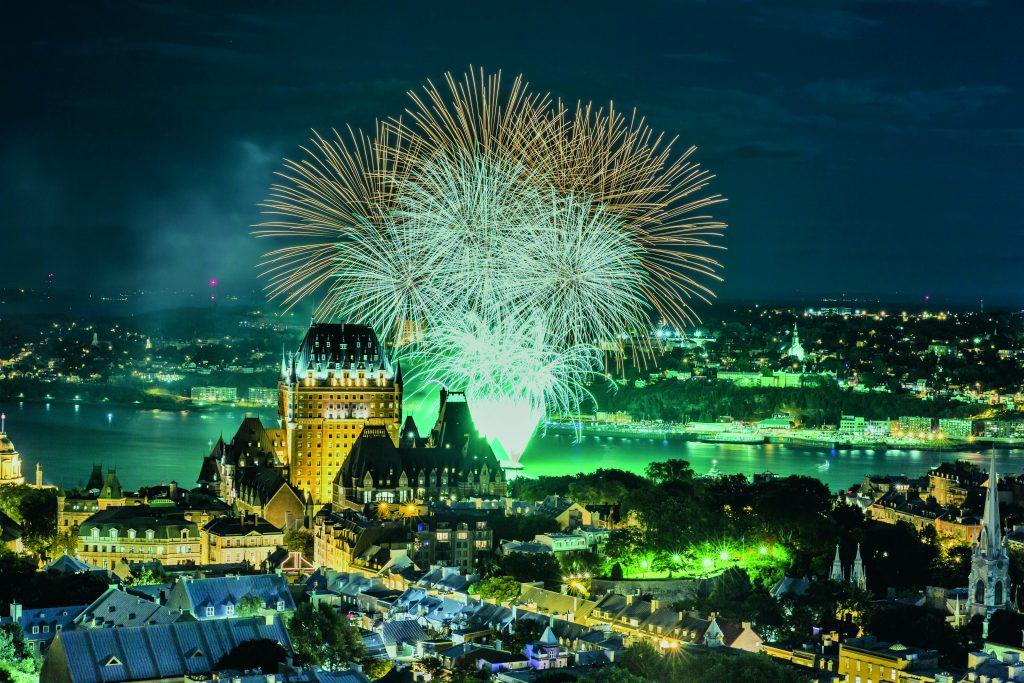
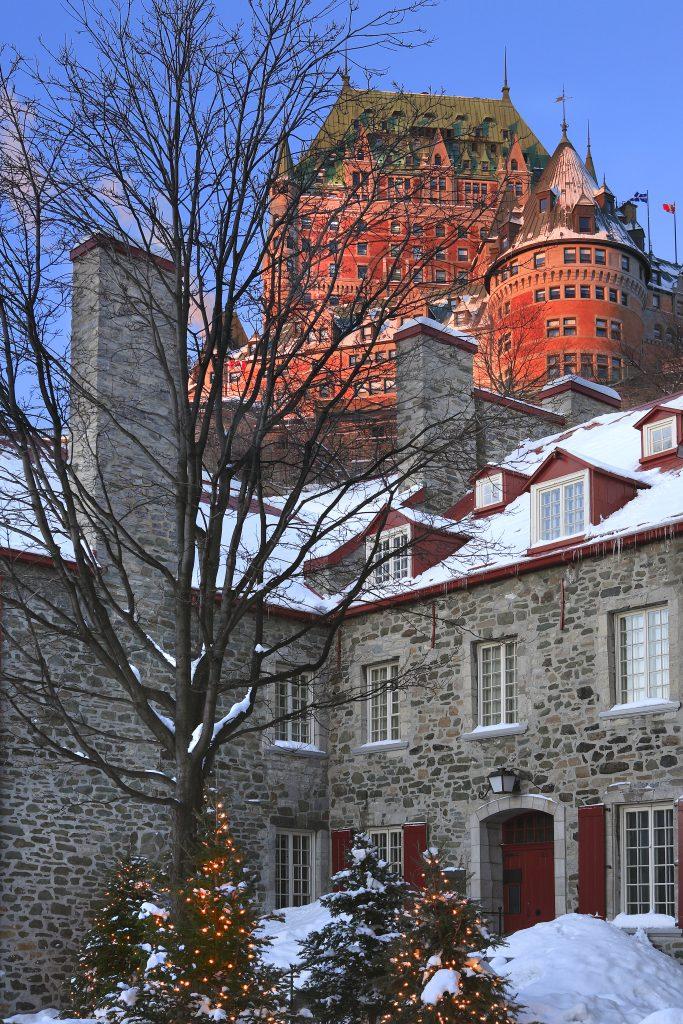
Québec City pulls you in with its breathtaking views from the Terrasse Dufferin at the steps of the Château Frontenac, the charm of Old Québec, and the energy of its festivals. Every visit feels inviting, and I’m excited to share everything I love about this city in this guide.
Disclosure: This article contains referral links to various services. If you click on these links and make a purchase, I may earn a commission or earn points or miles at no additional cost to you. These referral links help support the maintenance of this site and the creation of content. I only recommend products or services that I genuinely believe will be of value to my readers. Your support through these links is greatly appreciated.
For more information on the privacy policy, please make sure to click HERE.
Where is Québec City?
Québec City is the capital of the province of Québec in Canada and sits along the St. Lawrence River in eastern Canada. It’s about 160 miles (260 km) northeast of Montreal and around 540 miles (870 km) from New York City.
A City on a Cliff
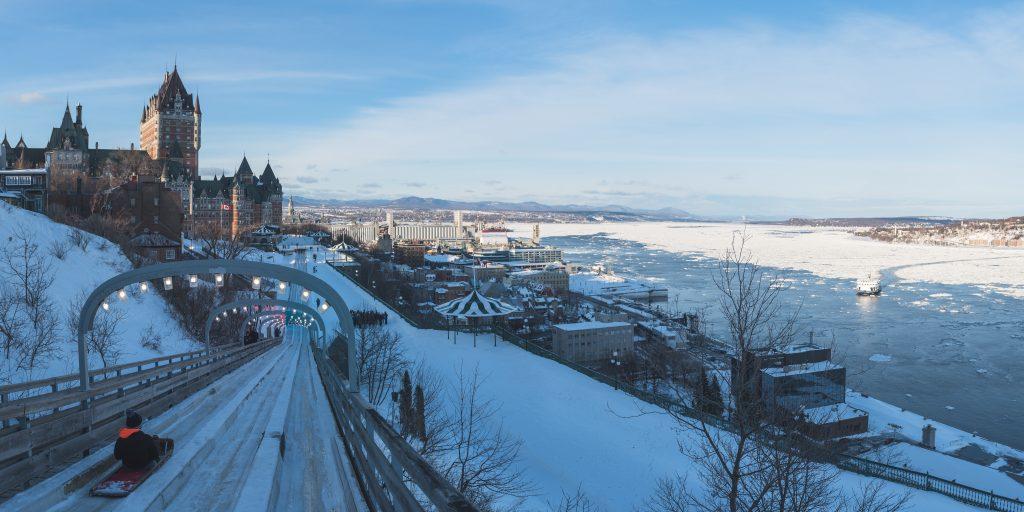
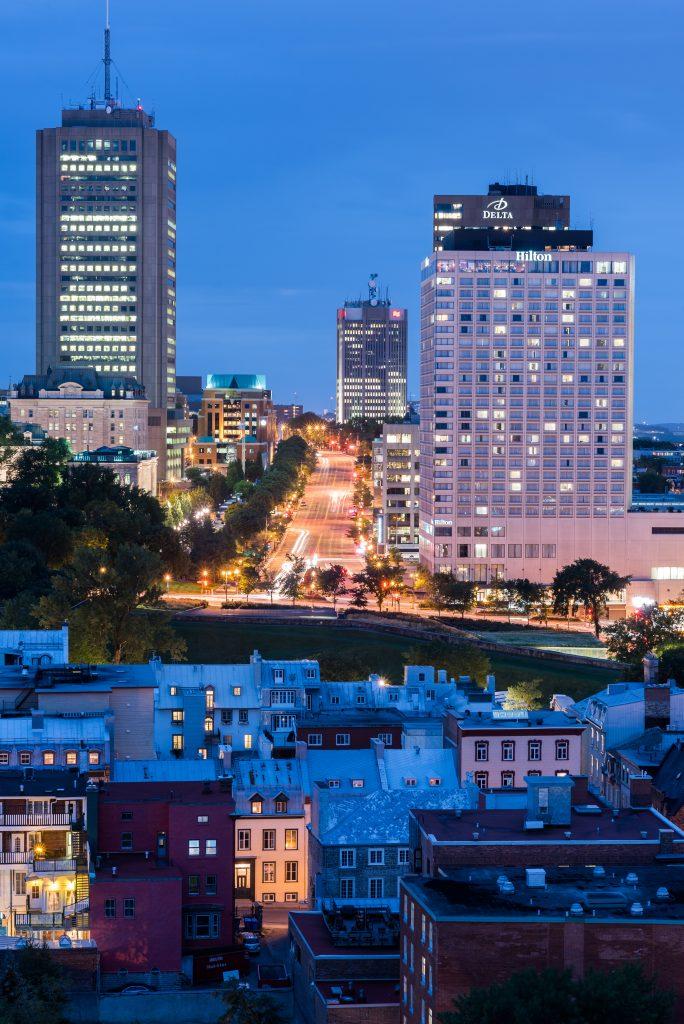
Québec City is uniquely divided into two main sections: Upper Town (Haute-Ville) and Lower Town (Basse-Ville). Upper Town sits on a cliff (Cap Diamant) overlooking the St. Lawrence River, providing stunning views and a natural defensive advantage that helped shape its history. Lower Town is the historic district where the city was founded and features cobblestone streets, charming squares, and centuries-old buildings.
A Four-Season Destination
Québec City experiences all four seasons, with warm summers, breathtaking autumn foliage, snowy winters, and mild springs. Winters are especially famous for their snowfall and the Carnaval de Québec, one of the largest winter festivals in the world.
A UNESCO World Heritage Site
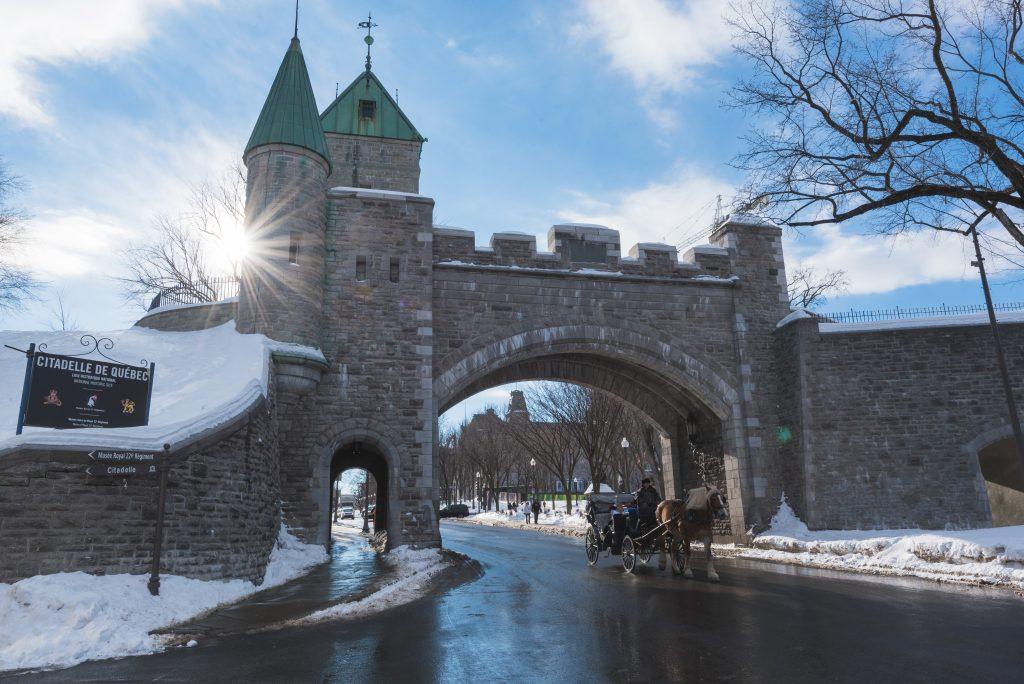
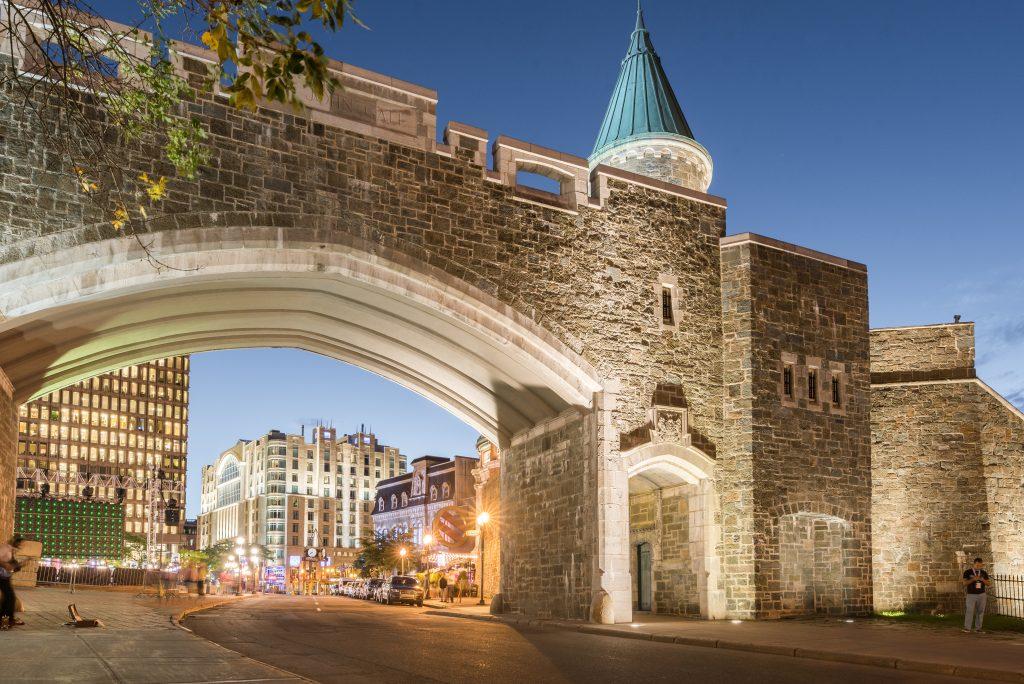
Old Québec (Vieux-Québec) is a designated UNESCO World Heritage Site, making it the only city in North America outside of Mexico with preserved city walls. These fortifications, along with landmarks like Château Frontenac and Place Royale, give the city its historic charm.
A Piece of Europe in North America
Québec City is one of the oldest cities in North America, founded in 1608 by Samuel de Champlain. With its fortified walls, French colonial architecture, and cobblestone streets, it feels more like a European city than a typical North American destination. It makes the city feel romantic, giving it a special charm that brings couples to the city for special events such as anniversaries and proposals..

Things To Know At A Glance

In January 2025, the conversion rate was approximately $1.41 CAD for every $1 USD.
Canada is very card-friendly for Visa and Mastercard, but not all places accept American Express or Discover. Carrying some cash (CAD) is helpful, especially for purchases at smaller businesses or markets.
Contactless payments like Apple Pay and Google Pay are widely accepted.
French is Quebec’s official language by law. Many locals, especially in Quebec City, primarily speak French. Learning a few basic French phrases can be helpful and polite when visiting the province and the city. Always start with a French greeting and don’t assume that English is spoken.
Canada is home to over 70 Indigenous languages, spoken by various First Nations, Métis, and Inuit communities across the country. While you may not encounter them in everyday travel, they are an important part of Canada’s cultural and linguistic heritage.
Your passport must be valid for at least six months beyond your planned departure date.
To review the entry requirements for your specific country of origin, click here.
Québec uses Type B electrical outlets, the same as in the U.S. The standard voltage is 110-120V with a frequency of 60Hz. If you’re traveling from a country with different plug types, a universal adapter with surge protection is recommended. Additionally, for devices like hairdryers and hot tools, a voltage converter may be necessary.
Dial 911 if you end up experiencing an emergency while visiting Canada.
Best Times to Visit Québec
Québec City is stunning year-round, but timing your visit based on your interests can enhance your experience.
- Spring (April-May): Fewer tourists, affordable hotel rates, but some attractions (like Montmorency Falls) may still have ice.
- Summer (June-August): Peak tourist season with warm weather (~75°F/24°C). The best time for rooftop patios and boat cruises.
- Fall (September-October): Best time for foliage photography with vibrant colors. One of the city’s best-kept secrets? In mid-October hotel rates drop significantly after Thanksgiving weekend (Canada’s Thanksgiving is in early October)..
- Winter (November-March): Magical snow-covered streets, Carnaval de Québec, and Christmas markets. Hotels in December are $$$, but January-February rates are much lower!
How To Get There
Jean Lesage International Airport (YQB) is the main airport serving Québec City, located about 11 miles (18 km) west of downtown. It offers domestic and international flights, with connections to major cities in Canada, the U.S., and seasonal destinations in Europe and the Caribbean. The airport is modern, easy to navigate, and provides bilingual services in French and English. Travelers can reach the city center by taxi, rideshare, or public transit.
While Jean Lesage International Airport (YQB) is the primary entry point, many travelers prefer alternative routes, especially if they’re exploring Canada or the U.S. beforehand.
- By Train (VIA Rail Canada) VIA Rail operates train services connecting Québec City to Montreal, Toronto, and Ottawa. The Montréal-Québec City corridor is the most popular route, taking about 3.5 hours.
- Train Station Gare du Palais: located in Old Québec, making arrival convenient for tourists staying in the historic district.
- Train Station Gare du Palais: located in Old Québec, making arrival convenient for tourists staying in the historic district.
- By Bus (Intercity Coaches)
Bus travel is an affordable option, with frequent departures from Montreal, Ottawa, and Toronto. The main providers are:
- Orléans Express: The most reliable bus line from Montreal (3 hours) and Ottawa (5.5 hours). Free WiFi onboard.
- FlixBus: Budget-friendly option, but service frequency varies by season.
- Bus Station Gare du Palais: (same as the train station), a short walk from Old Québec.
- Sainte-Foy (St. Foy) Station
Many intercity buses also depart from Sainte-Foy (St. Foy) Station, which is about a 20 minute drive (more in the winter) from Old Québec. If you’re booking a bus, check whether your departure is from Sainte-Foy, as this may require a taxi or public transit ride, adding extra cost and time to your trip.
- Orléans Express: The most reliable bus line from Montreal (3 hours) and Ottawa (5.5 hours). Free WiFi onboard.
- By Car (Road Trip Tips)
Driving to Québec City gives you the flexibility to explore nearby regions like Île d’Orléans and Montmorency Falls.
- From Montreal: ~2.5–3 hours via Autoroute 20 or Autoroute 40 (more scenic).
- From Boston: ~6 hours via I-95 North to Route 173.
- From Toronto: ~8.5 hours via Highway 401 and Autoroute 20.
- From Montreal: ~2.5–3 hours via Autoroute 20 or Autoroute 40 (more scenic).
- Winter Driving Warning: Snowstorms can make roads dangerous between November and March. If renting a car, ensure it comes with winter tires (mandatory by law from Dec 1 to Mar 15).
Getting Around Québec City
Québec City is highly walkable, especially in Old Québec, where many of the main attractions are within a short distance of each other. However, depending on your itinerary, you may need other transportation options:
Public Transit
(RTC – Réseau de Transport de la Capitale) Québec City’s bus system, RTC, offers affordable and reliable transportation, with routes covering downtown and surrounding neighborhoods.
A single fare costs $3.75 CAD (exact change required), or $3.50 on an OPUS Card. You can also purchase an unlimited day pass for $10 CAD. Multi-day passes are also available. For the most updated fare information, make sure to read the RTC website.
The 800 and 801 Metrobus lines are the most useful for tourists, connecting Old Québec from with major attractions and shopping districts. These routes run about every 5 min during peak hours to 9-15 minutes during off-peak hours.
Taxi & Rideshare
Taxis are widely available, and rates are regulated by the city. A ride from Jean Lesage Airport (YQB) to Old Québec has a fixed rate of $41.40 CAD during the day and $47.50 CAD at night.
Most taxis take credit card payments but it is always good to ask before getitng in. .
Uber operates in Québec City, often offering lower prices than traditional taxis.
Funicular
The Old Québec Funicular connects Lower Town (Petit-Champlain) with Upper Town near Château Frontenac. It’s a scenic but very short ride.
Cost: $5 CAD one way (cash or card accepted).
Biking
Québec City has a growing network of bike paths, with rentals available through Cycloservices.
Vélopiste Jacques-Cartier/Portneuf and the Samuel-De Champlain Promenade offer great scenic cycling routes.Canada can be pricey,, but here’s how to keep costs down:
Tips
- The last bus from Montreal often sells out, especially on weekends and holidays. Book your seat at least 24 hours in advance to avoid getting stuck.
- Many Old Québec hotels don’t have on-site parking or charge $30–$40 CAD per day. If staying in Old Quebec, find parking by reading this.
- Visitors staying at a participating hotel for at least two nights can receive a smart card granting them unlimited free access to the RTC bus network for three consecutive days. Check the offer details and the list of eligible hotels here.
- Learn how to greet, say please, thank you and a few other basic phrases in French. People are more willing to help if they see that you make a minimum effort to start in French.
Why Québec Should Be on Your Travel List
There’s something magical about Quebec City that has pulled me back four times now, with each visit revealing new layers to this extraordinary place. What began as a December adventure with my best friend in 2016 has evolved into a deep, personal connection with a city that feels both exciting and comforting at the same time. There is still a lot for me to explore and I can’t wait to go back during a different season to be able to see this city in a new light.
The Winter Magic That Keeps Me Coming Back
While Quebec City probably shines in every season, there’s something truly special about winter here that has captured my heart. The snow-dusted fortifications, the warm glow of lights reflecting off ancient stone buildings, and the crackling fireplaces in cozy restaurants create an atmosphere that feels straight out of something so beautiful, I can’t fully describe it.
The Christmas markets, with their handcrafted gifts and mulled wine, transform the already charming streets into a holiday wonderland that gives the European Christmas markets a good “run for their money”. And yes, it’s cold—freezing cold, but breathtakingly so — and that’s part of the magic. There’s an authenticity to how Les Québécois embrace the season rather than escaping it, bundling up to stroll the Plains of Abraham or warming their hands around a cup of decadent hot chocolate. It is an experience that this Floridian can’t get enough of and keeps me returning time after time!
Québec City is a living history lesson
Québec City’s streets tell stories that span over four centuries. Walking through the fortified walls of Old Québec is like stepping into a living museum where history isn’t confined to plaques and exhibits, it is a part of daily life. The city’s preservation of its French colonial heritage creates an authentic experience you can’t find elsewhere in North America..
What I love most about Québec City is how you literally walk right through or spend the night with its history. Unlike museums where everything’s behind glass, here you’ll find artifacts displayed exactly where they were discovered, sometimes right under your feet! The Lower Town (Basse-Ville) area, particularly Place Royale and the Old Port, sits atop archaeological treasures that continue to be discovered during renovations and construction. To learn more about the history of Québec City in 10 minutes or less, make sure to read here.
Auberge Saint-Antoine: A Hotel and Museum in One
The most stunning example is Auberge Saint-Antoine, a luxury boutique hotel that transformed into an accidental archaeological marvel during its expansion in the 1990s. During excavation, workers uncovered more than 5,000 artifacts dating from the 1600s to 1800s—everything from French pottery and British military buttons to trading tokens and centuries-old wine bottles.
Instead of hiding these treasures or sending them to the museum (Museum of Civilization located across the street from the hotel), they were incorporated throughout the property. Each room features artifacts discovered on-site, displayed in custom cases with informative descriptions. Even the hotel’s restaurant, Chez Muffy (housed in a restored 1822 maritime warehouse), showcases architectural elements and objects unearthed during renovations.
When you wander through those narrow streets, you’re walking the same paths that French colonists, British soldiers, and local merchants traveled centuries ago. You’ll sleep in hotel rooms with 300-year-old stone walls and dine in restaurants where they found musket balls during renovations.
For anyone who gets excited about history, Québec City feels like a time machine. Every stone has a story, every building holds secrets, and around every corner is another piece of the puzzle that became North America.
Why I think you will love Québec City:
For travelers seeking a destination that combines rich history, cultural immersion, culinary delights, and natural beauty, Québec City is a place to experience with all your senses. It doesn’t matter if it is your first visit or your fifth, this city continues to reveal new layers that will keep calling you back.
For women seeking a destination that offers beauty, safety, culture, and luxury, Quebec City is one of my top recommendations for a first solo trip (if you feel comfortable learning a few basic French words). And yes, you might find yourself returning season after season, year after year, each time discovering new reasons to fall in love with this city. I certainly have.
Would you like to save this?
If you happen to visit using this Quebec City Travel Guide, please leave a comment and let me know what your favorite part of your trip was.
Resource List
? Subscribe to the blog and newsletter for exclusive content about this destination and more.
? Never travel abroad (from the US) without travel insurance. To compare coverage and rates from many reputable insurers, use this tool.
? If you are considering visiting Canada, make sure to check out this Canada travel guide.
? For currency conversions, use XE. This tool is extremely easy to use.
? For visa entry requirements to Canada and any country around the world, check this website.
? If this is your first time considering solo travel, you might find my Guide to Solo Travel helpful. It covers everything from picking your first destination and even Travel Hacking 101.





 ES
ES 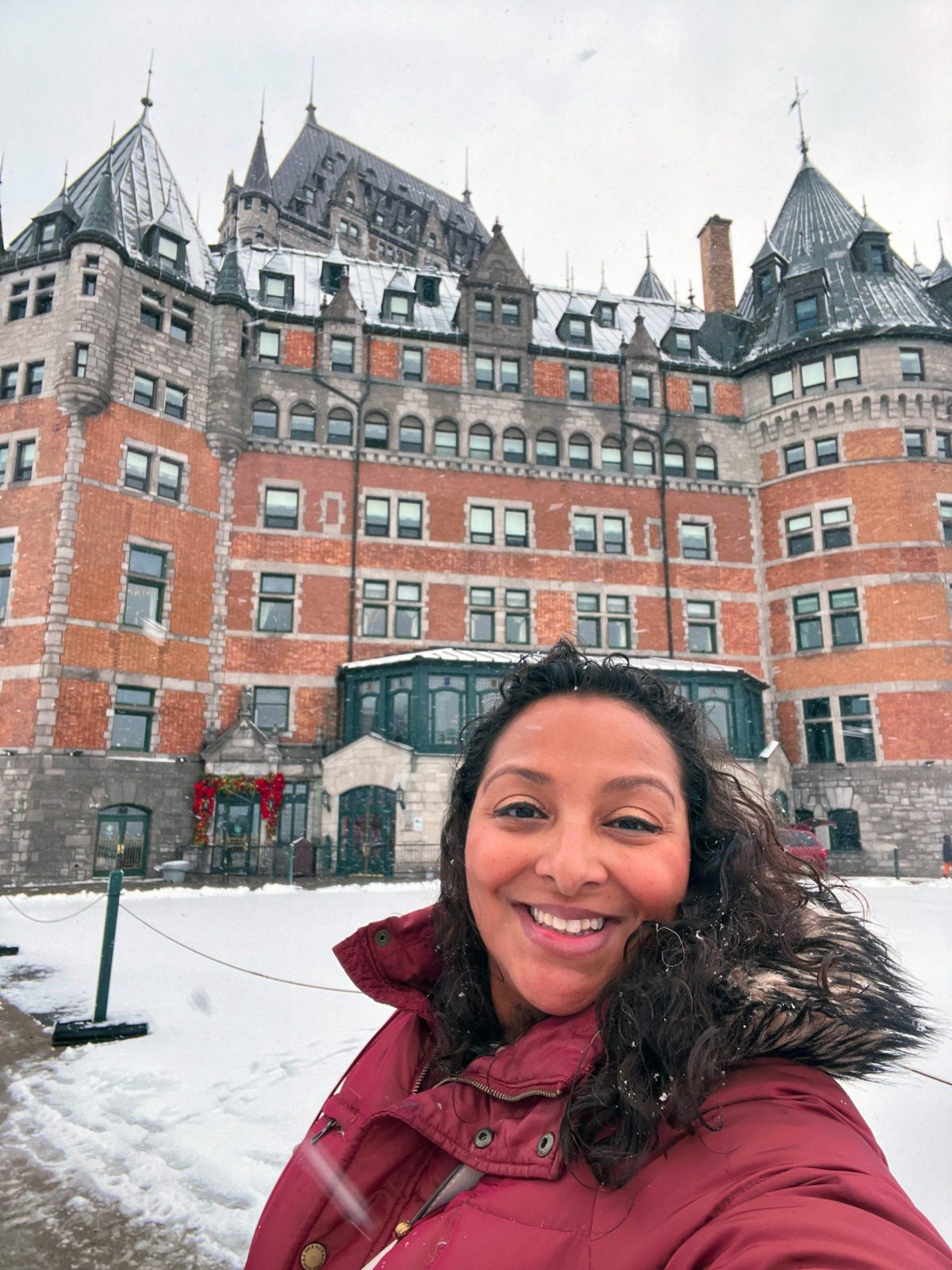
I’m travelling to Quebec City in 2 weeks as a first time soloist so I truly appreciate this article!. Thank you!
Hi Christi! I am so happy that this blog post was useful in planning your trip! Make sure to come back and let me know what your favorite part of visiting Quebec City was.